Indian fashion is as ancient as the human civilization with a mix of regional, cultural and historical influences. Our generation is influenced by the world of fashion so much so that it has become as essential as food and water. And mind it, it is not just wearing clothes we are talking about but the ever evolving and changing fashion trends which we love to incorporate into our wardrobes.
Apparel made of materials, for example, creature skins and vegetation was at first utilized by early people to shield their bodies from the components. The utilization of garments and materials over the ages mirrors the changing improvement of civic establishments and advances.History of dress in the Indian subcontinent can be followed to the Indus Valley Civilization or prior. Indians have principally worn dress comprised of locally grown cotton. India was one of the main spots where cotton was developed and utilized even as ahead of schedule as 2500 BCE during the Harappan period.
THE VEDIC ERA
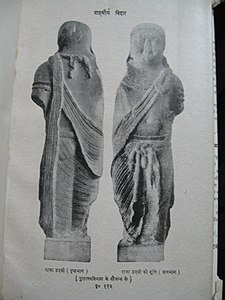
The Vedic time frame was the time length somewhere in the range of 1500 and 500 BCE. During the Vedic era, a single cloth draped around the body, across the shoulder was pinned or fastened with a belt and was considered a comfortable attire for hot weather. Paridhana or vasana was a lower garment which was a cloth draped around the waist with a string or belt called as rasana or mekhala. A shawl-like garment worn over the shoulder was called as uttaiya. Pravara, a third garment was like a cloak mostly worn in cold months. This was a general dressing for both men and women, which only varied in the style of wearing and size. When stitching started during the Vedic period, for women saree was the easiest attire to wear.A blouse or choli was also incorporated to cover the upper part of the body. Ghagra choli and dupatta were also introduced later during the Vedic period. Some of the sculptures revealed the used of cloth on the lower body which was pleated in front and held with the help of a long girdle. The girdle at time appeared to the end of the cloth, this might have been a trailblazer to the modern saree. Vedic men were also known to wear dhotis which draped around the waist and separated with pleats. No upper garments were worn by men during the Vedic era.
THE MAURYAN TRADITION
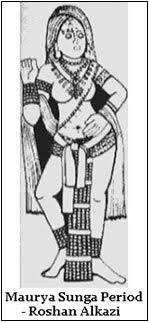
In the Mauryan tradition (322–185 BC) the most punctual proof of sewed female attire is accessible from the sculpture of Mother Goddess(from Mathura, third century BCE). Women in the Mauryan Empire regularly wore a weaved texture belt with drum headed bunches at the finishes. As an upper piece of clothing, individuals’ principle attire was uttariya, a long scarf. The distinction existed uniquely in the way of wearing. Now and again, its one end is tossed more than one shoulder and once in a while it is hung over both the shoulders.
In materials, for the most part cotton, silk, cloth, fleece, muslin, and so on are utilized as filaments with trimmings hooked on to an exceptional spot. A portion of the adornments had their particular names too. Satlari, chaulari, paklari were a portion of the accessories.
THE ROYALTY OF KINGS
When we look back at the glorious centuries of kings and queens, flashes visions of beautiful palaces and forts, fine arts and music, lavish food and of course extraordinary clothing and fashion. India has seen many dynasties and rulers and every kingdom, be it Mughals, Marathas, Scindia dynasty or Rajputana rulers, brought a distinct quality and influence to ancient Indian fashion.
The royals of udaipur
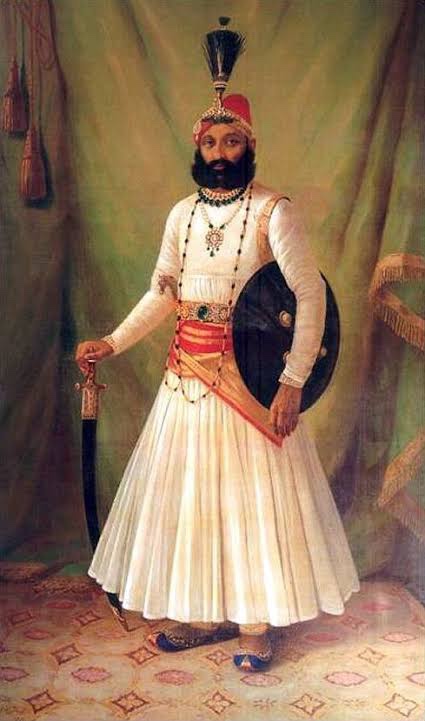
kings of Udaipur belong to Mewar dynasty. Udaipur, the beautiful city of lakes is a home to many royal families and rich legacy. The splendor of Udaipur Maharanas is depicted by the Rajasthani royal paintings. One of the essential accessory to showcase their royalty is a parasol or chattri called Kirnia. Maharanas of Udaipur style of dressing over a period of time got influenced by European dressing; they wear bandh galas with western style jewelry. The occasional dressing of former Maharanas included a traditional royal garment which included a turban or pagdi with a long sarpech embellished tail, long and flowy achkans with churidar pants and a sash across the body and a belt or a kamar bandh around the waist. A sheathed sword is another important element of their grandeur dressing which symbolizes power and patriotism. Maharanas have a profound love for fine jewels and have exquisite pieces in their heritage collection designed by French jewelers. The royal rides like elephants horses are also decorated with clothing embellished with gemstones.
NIZAM OF HYDERABAD
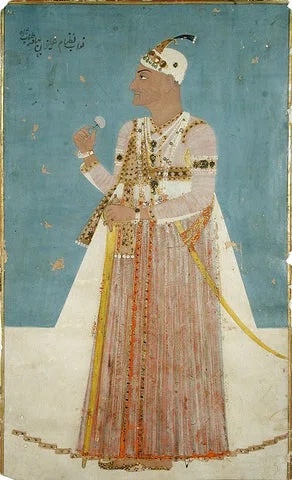
Nizams were hugely fond of fine arts, culture, and literature. Nizam jewelry is world famous and one of a kind and Nizams loved to flaunt them with pride. Fine jewelry adorned with pearls and exquisite gemstones is one of the signature designs of Nizam jewelry. The Nizams wore sherwani with a turban embellished with a sarpech. Nizam jewelry has a huge influence on indian ethenjc jewellery ,wedding jewellery specially made with precious gemstones and pearls is inspired by Nizam.
MAHARAJA OF TRAVANCORE
One of the modest royal families to rule a region of India is the royal family of Travancore. The Maharajas of Travancore lived a life which was nothing close to being lavish and opulent kinds. They have devoted their lives to the welfare of people and spend very less on themselves from the state’s resources. The simplicity was depicted in their simple style of dressing. The queens used to wear Mundu sarees similar to the Kasavu sarees of Kerala in cream or white color with gold detailing.
THE MUGHAL TRADITION
Mughals have left a strong impression on craftsmanship in India. Their fine artistry and workmanship is absolutely unparalleled. Be it clothing or architecture their taste for every magnificent is easily reflected by the finery of designs. Attires created from luxurious silk, velvet, brocade and muslin and elaborate designs and embroideries were the distinct characteristics of the Mughal fashion. Men wore exquisite design short and long robes or coats which included long-sleeved clothing called chogha. Pagri on the head, a patka or sash at the waist, pyjama style pants were trademarks of men’s fashion. Their turbans were usually adorned with fine jewels or precious stones like diamonds, pearls and rubies.
Women, on the other hand, wore a traditional dress of Persia and Khurasan due to Purdah system. In the court of Humayun and Babar, most noble women wore loose wide pants. The upper body garment was loose which was fastened with a V neckline. When Rajput princess entered the Mughal kingdom, the influence of Hindu clothing could be seen in the court. Usually the clothing was changed often in the zenana during a day and was worn only once and then given away. Garments were made from thin cloth almost transparent with a gold lace. Turbans made with gold cloth and a feather covered the head. Kashmiri shawls were popularly used in the cold season. Bejeweled and patterned shoes with curly pointy tip were also worn by women.
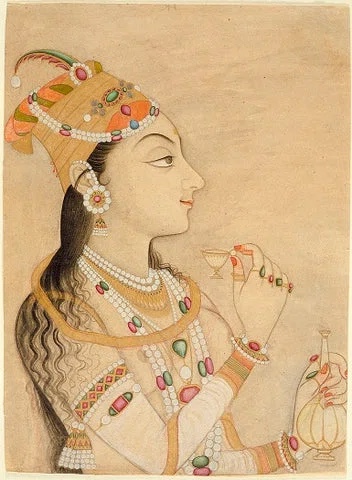
Our choices are and will continue to get influenced by what is in and what is out but we can proudly say India has the most colorful and vibrant spectrum of fashion which is evergreen!
by-mokshita jaiswal
 silken temptations