The Cold War spurred two parallel contests: the arms race and the space race. These raised tensions worldwide and gave rise to a sense of anxiety that permeated all aspects of daily life.From the bikini to the spacesuit, designers integrated the themes of the day into their couture attire.
THE BIKNI
Seventy-two years ago this month, on July 5, 1946, French designer Louis Reard unveiled a daring two-piece swimsuit at the Piscine Molitor, a popular swimming pool in Paris. The new fashion, dubbed a “bikini”.In the US, a modest two piece appeared during World War II, when fabric became scarce due to wartime rationing.US Federal law enacted in 1943 required that the same synthetics used for bathing suit production be reserved for the production of parachutes and other frontline necessities. So the thriftier two-piece suit was deemed patriotic. In 1946, Europeans happily greeted the first war-free summer in years and French designers came up with fashions to match the liberated mood of the people. Two French designers, Jacques Heim and the aforementioned Louis Read, developed competing prototypes of the bikini. Heim called this the “atom” and advertised it as “the world’s smallest bathing suit.”

SPACE SUIT
protective clothing of cosmonauts and astronauts inspired fashion designers of the 1960s who were fascinated by the idea of the spacesuit as life-sustaining and protective. They thought that the dangers of modern life could be countered by high-performance clothing that was self-supporting. Also known as astronaut fashion, the encouraged couture designers like Paco Rabanne, Pierre Cardin and Thierry Mugler to center entire collections around an intergalactic vision of the future.
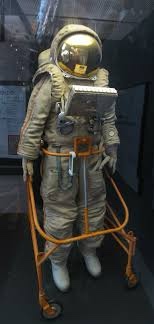
PAPER DRESSES
Fashion in the later 1960s focused on the idea of disposability, leading trend setting throwaway dresses. The military had been toying with the concept of paper clothes for quite awhile as evidenced by this quote in the Chicago Tribune from 1959.Much of tomorrow’s wearing apparel may be made out of treated paper, intended for use a few times, then for discard. The Quartermaster Corps is already investigating the use of such processed paper for parachutes, disposable uniforms, pup tents, and other shelters. It wears well, and its insulating qualities make it usable in all kinds of weather.”
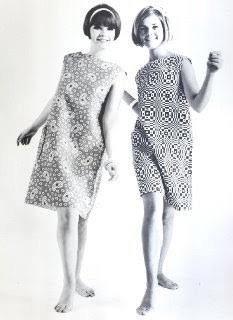
SYNTHETIC CLOTHING
Synthetics became synonymous with affordable clothing, and were associated with modernity and youth. The new materials were crease-resistant, machine-washable, and quick drying. Referred to as “wonder fabrics,” they were most often by-products of chemical research undertaken for military, aeronautical, and space purposes. The new synthetics were also thought to be disposable. Rapid obsolescence was a fundamental characteristic of product design in the US in the 1950s, and clothing was no exception. This phenomenon attracted critics like the author Vance Packer, whose book the waste maker was published in 1961. These fabrics were also quite popular in socialist countries.
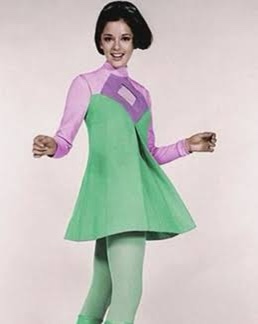
JUMPSUIT
Stretch nylon jumpsuits, PVC boots, and uniform insignia were made popular by television shows like Star Trek (from 1966) and The Avengers (1961-1969). The jumpsuit was unisex, usually made from synthetic materials, and thought to be highly utilitarian. It permitted the body to move freely, so it was perfect for the high kicks and karate moves characteristic of the Emma Peel character in The Avengers. The body stocking and cat suit were closely related
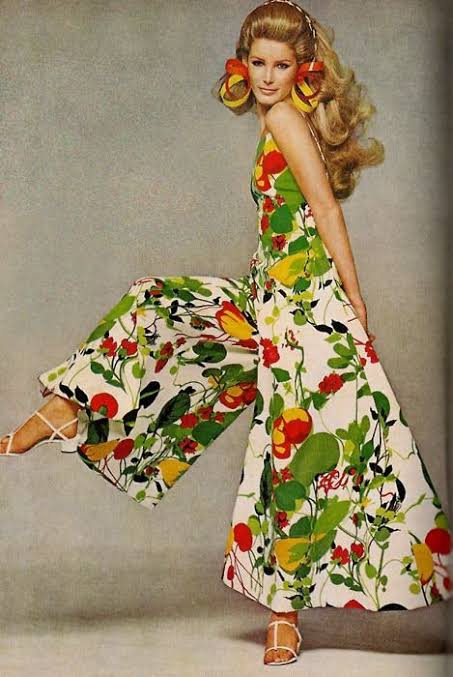
By the end of the 1960s concerns about over-consumption, militarism, and the environment were front and center. Gone was the space age optimism of the mid-1960s. This was now replaced in fashion by references to hippie and protest culture, flower power, and the dress codes of marches and ‘sit-ins.He used some of the fashions of the decade – miniskirts, PVC boots, paper dresses as signifiers of social decline. Along with other contributors, futuristic fashion lost its sheen.
by:mokshita
 silken temptations